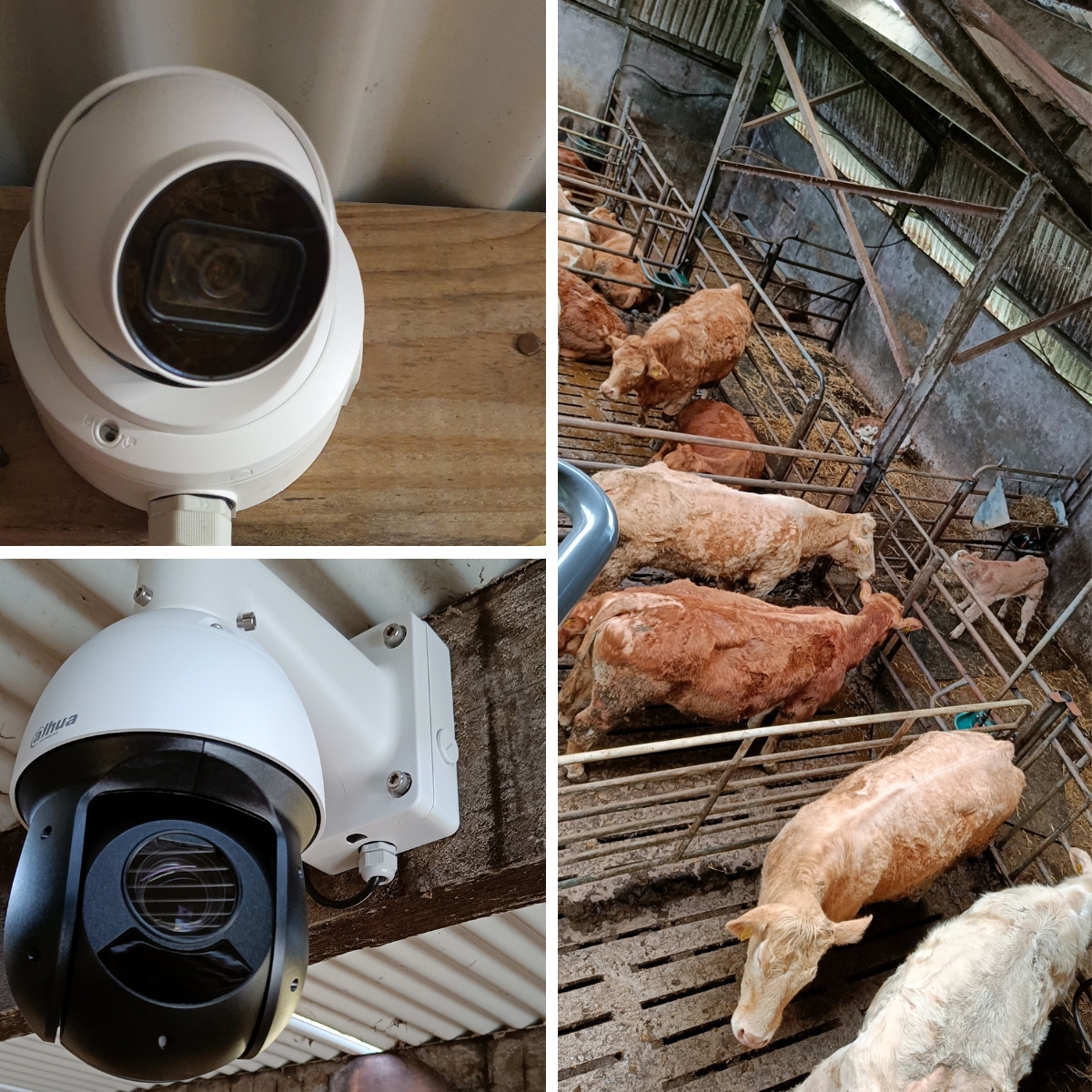
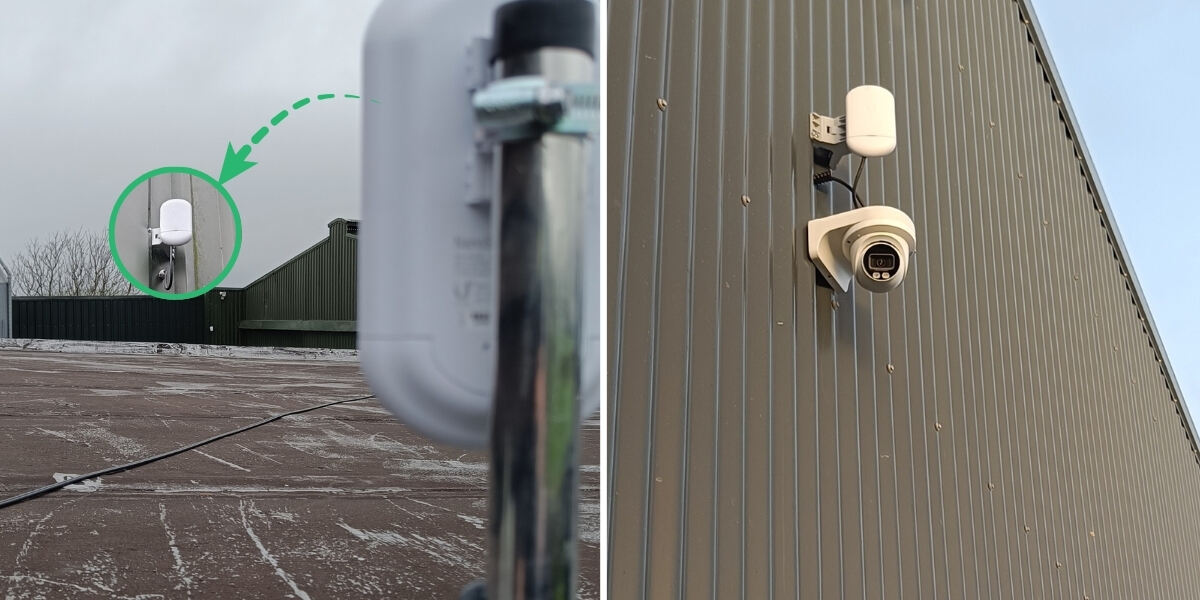
Most farmers start looking into yard connectivity for one specific reason: they want a reliable calving camera. They want to stop the 3 AM walks across a wet yard just to check on a quiet heifer. However, the reality of farming in 2026 is that a camera is only as good as the signal behind it.
To make this work, you need a farm network. Simply put, this is a dedicated system that carries the internet signal from your farmhouse out to your sheds and yard. It acts as the bridge that allows modern tools—from health-monitoring collars to high-definition cameras—to work to their full potential. Without this professional setup covering every corner of the yard, even the best high-tech gear will struggle to stay connected.
1. The Benefits: What a Connected Yard Actually Does
You might think you've managed fine without internet in the yard, but modern equipment is designed to be "always on." A dependable yard connection is now essential for:
- Livestock Monitoring without the Lag: Watch your calving or lambing pens in high definition from your phone, whether you're at the mart or in the kitchen.
- Farm Security & Machinery Protection: WiFi isn't just for the animals. A connected yard allows you to link intruder alarms and motion sensors. You’ll get an instant alert on your phone if a door is opened or unexpected movement is detected near your tractor or quad.
- Smart Agri-Tech Syncing: Keep critical data flowing for systems like Censortec MooMonitor+ collars, Lely Vector feeders, and Farmo water sensors. Without a signal, these high-tech investments are operating at half power.
- Reliable Calling in Dead Zones: Use WiFi Calling to make crystal-clear calls in those notorious mobile dead zones. It also enables high-definition video calls with your vet directly from the pen for a second opinion in real time.
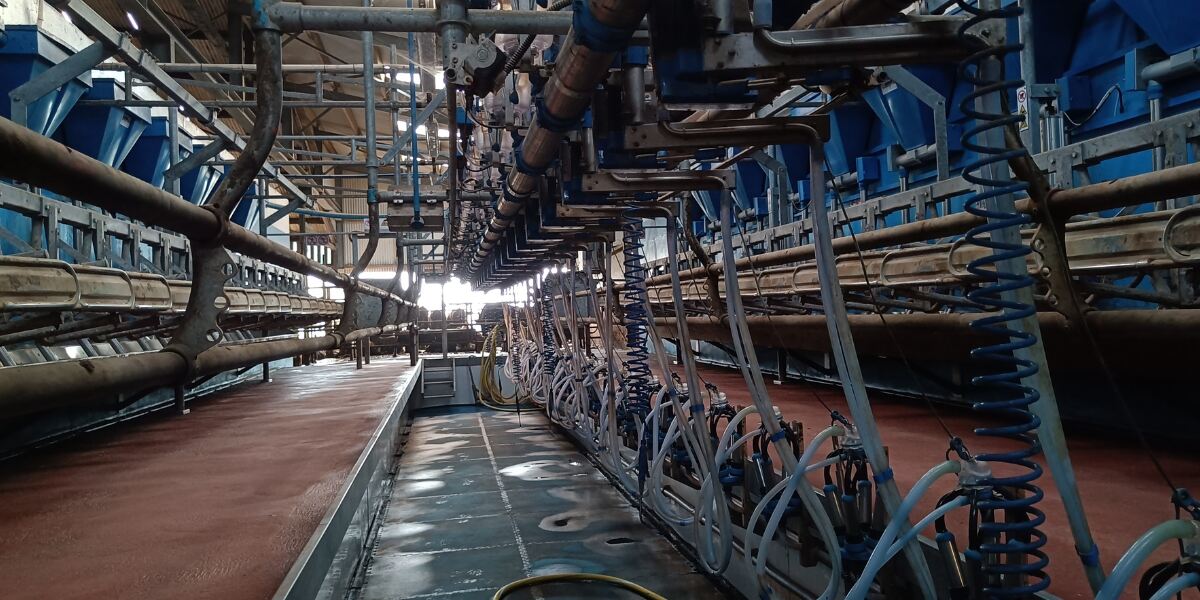
PtP tech allows farming tech such as Censortec
2. The "How": Bridging the Gap (PtP vs. Cabling)
Once you decide to connect the yard, the question is how to get the signal from the farmhouse to the shed. The right choice usually depends on three things: your layout, your budget, and how much time you have.
Option A: Traditional Wired Cabling (Cat6)
Running a physical data cable (Cat6) from the house to the shed is the "gold standard" for reliability. If you are already doing groundworks, building a new shed, or have a clear run of soft ground where you can easily drop a pipe, a physical cable is a great choice.
- Pros: Immune to weather and offers the most stable connection possible.
- Cons: The disruption and maintenance. If you have an established concrete yard, you’re looking at the noise and mess of a kango or a digger just to cross a few metres. Additionally, if an underground cable is damaged by rodents or future digging, locating and remediating the break can be costly and time-consuming.
Option B: Point-to-Point (PtP) Wireless Bridge
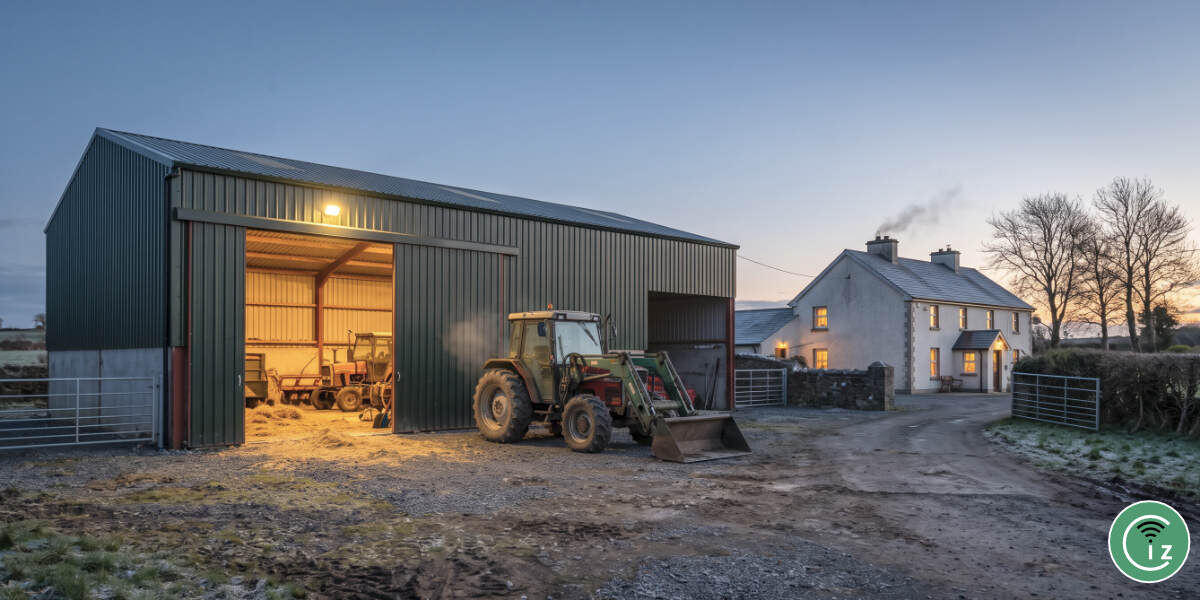
This is the modern solution for most established Irish farms. Instead of a wire, we use high-frequency radio waves to create an "invisible cable" through the air.
- Pros: Fast, clean installation with zero digging or mess. It can jump over obstacles and cover distances that would be far too expensive to cable.
- Cons: Requires a clear "line of sight" between the units. To ensure the connection remains stable and delivers full speed, expert installation is required to align the hardware precisely.
The Science Bit: Focused Power Standard WiFi broadcasts in all directions, which is why the signal dies as soon as you step outside. A PtP Link uses two dedicated units precisely aligned to face each other. They function like a high-powered torch beam, focusing the signal into a narrow, concentrated data stream.
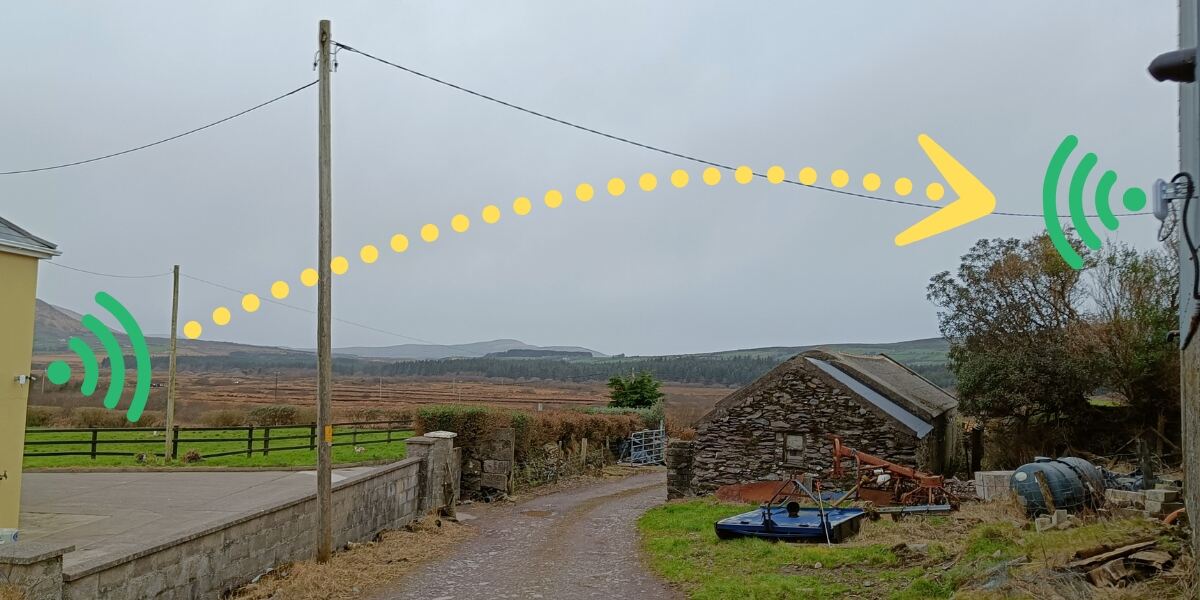
PtP in action, sharing WiFi from a farm home to a shed
3. The Professional Approach
Setting up a farm network requires understanding the unique demands of a farm environment. Standard home WiFi equipment isn't designed to handle the "signal killers" found in a yard, such as thick stone walls, galvanised shed materials, and sheds dispersed over a wide area.
Our approach is built upon years of experience working extensively on farms throughout Ireland. We believe in providing the right equipment, installed the right way. By ensuring hardware is positioned and configured correctly for your yard's layout, we ensure your technology saves you time and stress rather than adding to it.
Conclusion
Calving and lambing seasons are stressful enough without fighting with technology. Whether you’re tracking a herd or just need to be able to make a phone call from the back shed, the right infrastructure makes the difference.
Thinking of upgrading your farm connectivity? Don't wait until the busy season is already upon you. Take the time to get your yard connected properly, so you can focus your energy on the actual work of the farm this spring.