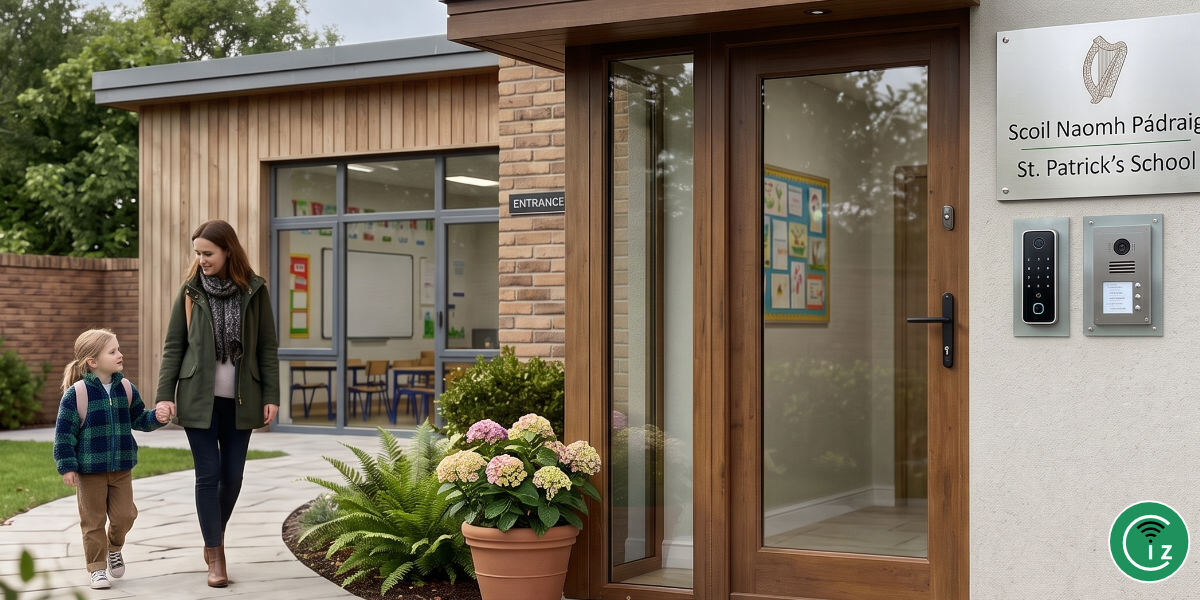
Picture a typical Tuesday morning in November. The rain is coming sideways, parents are rushing to beat the traffic, and children are arriving with half-zipped coats and forgotten lunchboxes. Inside the door, it is a beautifully controlled kind of chaos.
But for childcare managers, teachers, and school principals, this morning rush highlights a tricky daily balancing act: how do you keep your building warm, welcoming, and open to families while maintaining a strictly secure perimeter?
If your staff are constantly running back and forth to answer the front door or let late arrivals in, your security setup isn't just a bit of a nuisance. To be fair, it is a vulnerability. Every minute a staff member spends away from their room to act as a gatekeeper is a minute where staff-to-child ratios are put under pressure.
The Practical Limits of Traditional Locks
For decades, a heavy brass key was the gold standard. But in a busy, modern educational or childcare setting, physical keys can create operational issues:
- The Human Error Problem: A mechanical lock is only useful if the door actually closes and latches. In the real world, staff carrying heavy supplies or parents pushing double buggies will often prop a door open with a wooden wedge or a recycling bin "just for a second." Because traditional locks are passive, that door can easily stay wide open for hours without anyone realising the security line has been breached.
- The Issue of the Master Key: To spare staff the burden of carrying a keyring that looks like something from a medieval castle, facilities often rely on master keys. This is grand until someone loses one. If a master key goes missing, your entire security system is compromised. Re-keying a whole school or childcare facility is a massive, expensive headache that usually involves emergency locksmith fees and days of disruption.
- Lack of Flexibility: Physical keys offer no nuance. If you have a cleaner who only needs access between 6:00 PM and 9:00 PM on weekdays, you still have to hand them a physical key. Once they have that key in their pocket, they have 24/7 access to your building.
- The 7:45 AM Panic: Commercial doors are opened and closed hundreds of times a day. Eventually, keys bend and internal pins wear down. There is nothing quite like the feeling of a key snapping off in the main entrance lock at quarter to eight in the morning, just as the first parents are arriving.
Modern access control systems remove this daily friction. Upgrading your security does not mean turning your school or crèche into an uninviting fortress; it simply means making the day-to-day management of the building much easier.
Smart Tech that Solves Operational Problems
- Time-Based Scheduling: Instead of manually locking and unlocking doors, you can schedule your main entrances to remain open under visual supervision during peak drop-off windows (say, 8:00 AM to 9:00 AM) and automatically lock down tight the minute the bell rings.
- Instant Alerts for Propped Doors: If a door is held open for longer than a couple of minutes, the system sends a discreet, instant alert to management. This closes that critical "human error" loophole without staff having to constantly patrol the corridors.
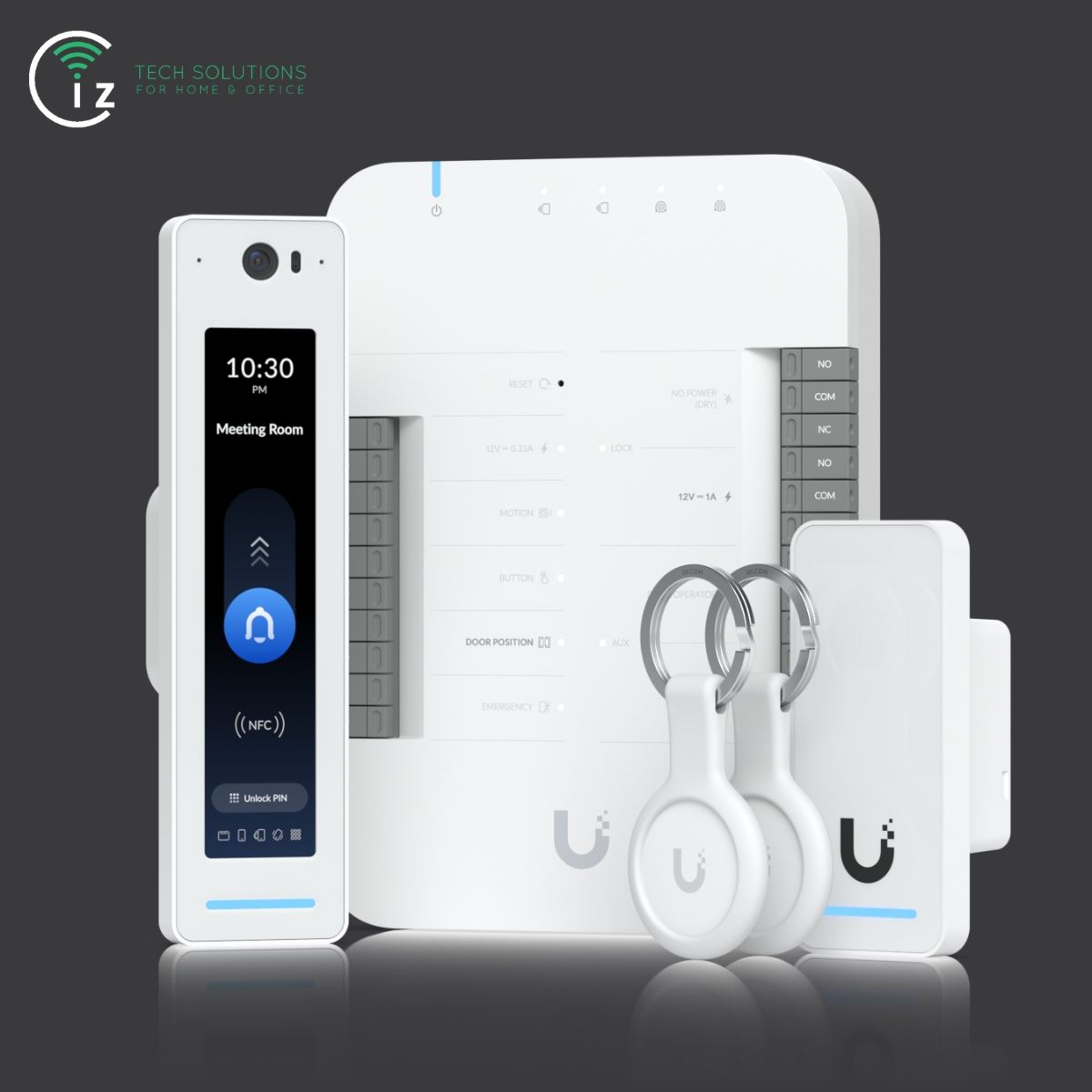
- Ditching the Keys for Fobs: If a staff member leaves or a key fob is lost in a car park, there is no need to panic or spend hundreds of euros changing locks. You simply log onto a computer or smartphone app, click on the lost fob, and delete it from the system instantly. It is secure, immediate, and costs absolutely nothing.
- Zone-Based Security: Access control allows you to partition your building. You can keep high-risk areas—like medicine cabinets, server rooms, or commercial kitchens—strictly restricted to authorised personnel only, even while the rest of the building is bustling with activity.
- Visual Intercom Systems: This lets your office staff or educators visually verify visitors and grant access remotely from a wall monitor or desk handset. It keeps the children safe and keeps your staff right where they need to be.
Anchoring Security in Safety Standards
Upgrading your access control is also a practical way to support your regular safety audits and meet official guidelines.
- For Childcare Providers: National childcare regulations require early years premises to be entirely secure against unauthorised entry. A smart access control system automates this duty of care, ensuring external doors are never left unlatched. It also ensures that staff are not pulled away from supervising children to manage physical gates.
- For National Schools: A robust, audited entrance aligns directly with the Department of Education’s School Design Guidelines. It helps the Board of Management meet its statutory duty of care under Health and Safety Authority (HSA) guidelines to protect both pupils and staff during the school day.
Furthermore, digital systems create a reliable audit trail. While a key fob log obviously doesn't replace your standard daily child attendance register, having a digital footprint of who accessed staff-only areas or medicine cabinets dramatically simplifies internal reporting and makes general safety inspections entirely stress-free.
Frequently Asked Questions
How do smart security systems comply with Irish educational and childcare guidelines? For early years settings, national standards require strict perimeter security. Smart systems automate this by ensuring doors lock reliably behind every visitor. For schools, the Department of Education requires robust access control at main entrances to prevent unmonitored public access while guaranteeing free, easy egress in an emergency.
What happens to automated security doors during power outages or fire alarms? This is a common concern, and it is a very important one. Professional systems use "fail-safe" locks. In the event of a fire alarm activation or a total power cut, power to the electronic locks is cut instantly, causing the doors to unlock automatically so they can be pushed open freely. To comply with Irish Building Regulations (Part B), these systems are integrated directly with your fire alarm panel and are always accompanied by a local green emergency break-glass unit beside the door.
What happens in the event of an emergency lock-down? Cloud-based systems allow for an instant, site-wide lockdown via a secure smartphone app or a single physical panic button, securing every external door in seconds without staff needing to physically run around checking keys.
Can access permissions be restricted by specific times of day? Absolutely. You have total flexibility. You can set permissions so that maintenance staff can only enter out of hours, ensure parents only have access during designated pick-up windows, and give senior management 24/7 entry.
Ready to lose the keys and the chaos?
If you are tired of the daily drop-off bottleneck and want to make your building safer and easier to run, it might be time to look at smarter security.
Drop us a line or give our team a shout today. We can have a chat about your layout and design a straightforward, reliable system that fits your facility perfectly.
If you want to understand how the hardware works first, have a look at our guide.
Contact Us
We've a variety of ways for you to contact us. Click on the button below to view the options
Contact Us